Madhubani
📍 Bihar, India
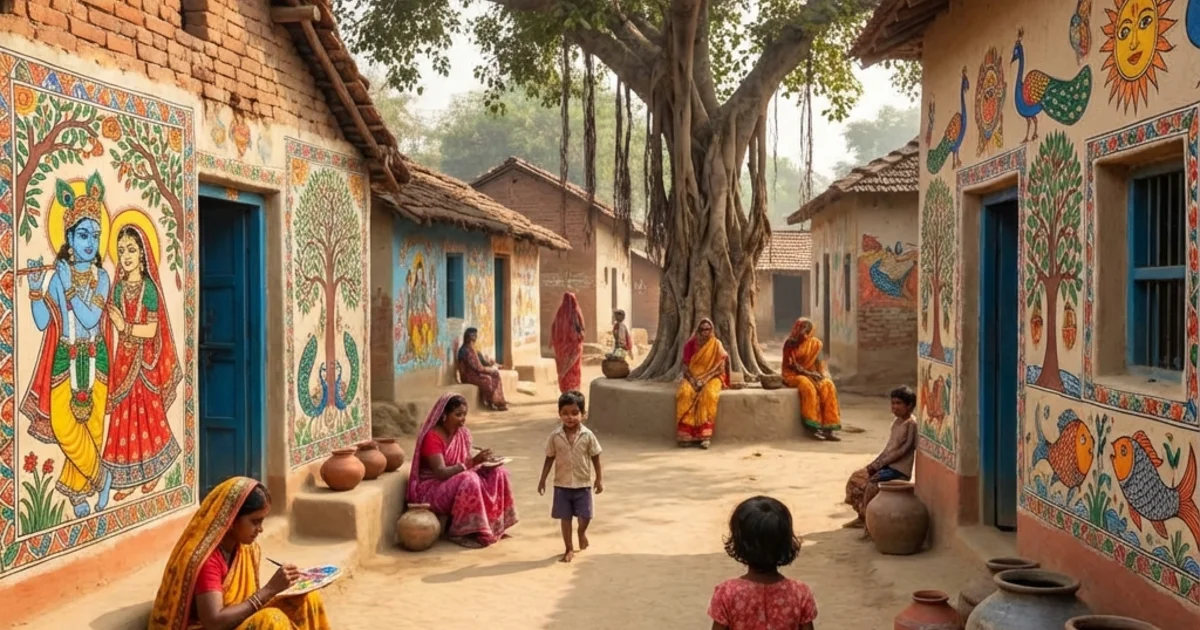
Madhubani, whose name literally translates to the 'Forest of Honey', is globally celebrated as the beating heart of Mithila's artistic and cultural renaissance. Located in the northern plains of Bihar, this district has gained worldwide fame for its unique and vibrant tradition of Madhubani Painting, an ancient art form that was once restricted to the mud walls of village homes but has now found its way into prestigious international galleries and prestigious national awards. The art form is characterized by its bold use of natural colors, eye-catching geometric patterns, and themes largely derived from Hindu mythology, nature, and the local daily life. Key villages like Jitwarpur and Ranti have become living open-air museums where almost every household participates in this creative legacy, which was traditionally passed down from mothers to daughters for over three millennia. The origins of this art are said to date back to the time of the Ramayana, when Raja Janak commissioned local artists to decorate the entire city for the wedding of Ram and Sita. Beyond its world-renowned paintings, Madhubani is also famous for its 'Sikki' grass crafts, where women weave golden-colored wild grass into beautiful domestic items, and its unique 'Sujani' embroidery, which tells stories through stitch-work. The district is a land of lush green fields, numerous sacred ponds (pokhars), and a deeply rooted agrarian society that celebrates its festivals like Chhath and Madhushravani with unparalleled zeal. Madhubani also holds significant historical value, with sites like the Saurath Sabha Gachhi once serving as a major center for Vedic scholarship and matrimonial selection. Today, the town is a bustling center of Maithil identity, where the ancient language of Maithili is spoken with pride and the traditional hospitality of the region remains unchanged. For travelers and art enthusiasts, a visit to Madhubani offers a rare glimpse into a civilization that has successfully preserved its creative soul while adapting to the modern world, making it a true 'cultural capital' of rural India.
Contributed by