Famous Places
Walk through the corridors of history and spirituality.


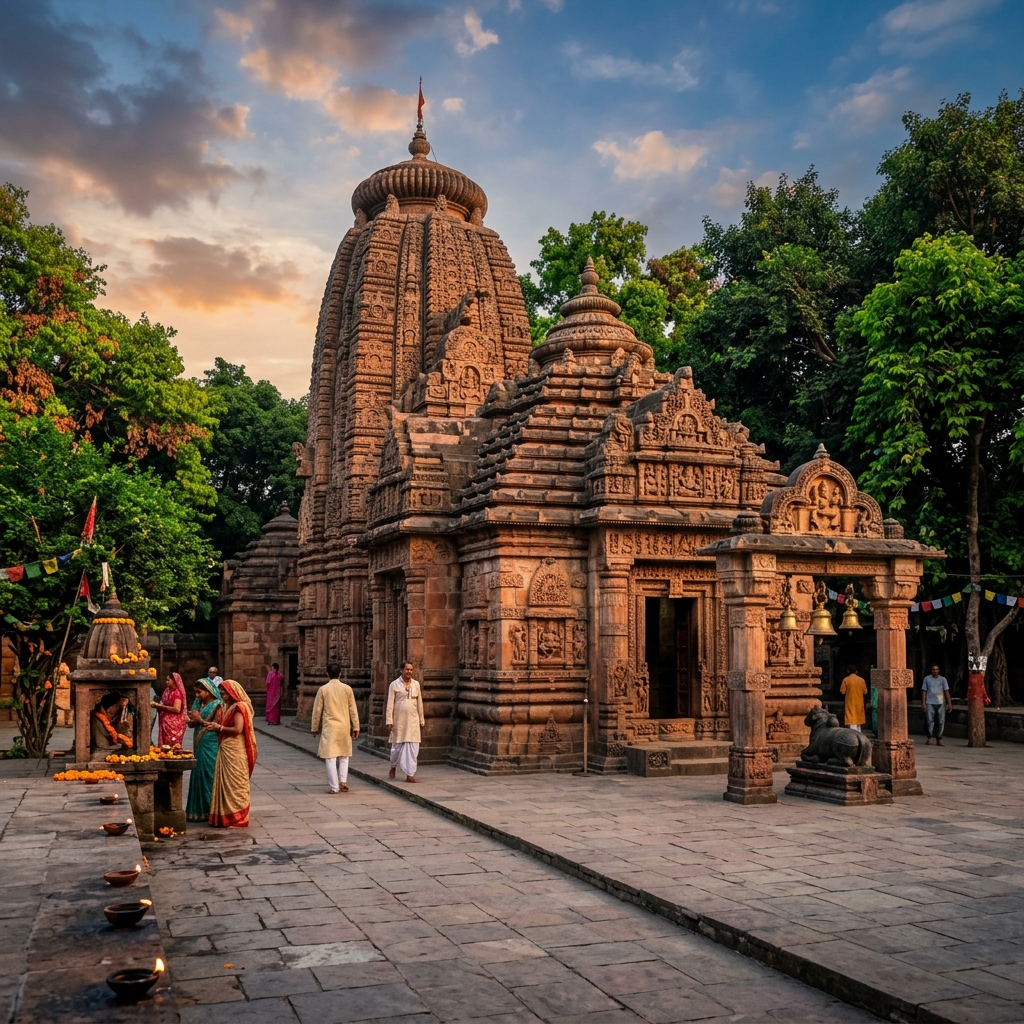
Villages of Art & Wisdom
The soul of Mithila lives in its villages, each specializing in a unique craft or legacy.
Jitwarpur
📍 MadhubaniThe first 'Craft Village' of Bihar. Home to Padma Shri awardees like Sita Devi and Baua Devi. Famous for Bharni and Kachni style paintings.
Ranti
📍 MadhubaniA hub of the 'Line Work' (Kachni) style. Known for the legacy of Mahasundari Devi. The village breathes art, with every wall telling a story.
Mangrauni
📍 MadhubaniAn ancient village known for its connection to Tantra and Astrology. Uniquely, it hosts 11 Ekadash Rudra temples.
Bisfi
📍 MadhubaniThe birthplace of Vidyapati, the Shakespeare of Mithila. A pilgrimage site for literature lovers.
Pilakhwar
📍 MadhubaniKnown as a center of Sanskrit learning and for its ancient manuscripts. It represents the intellectual zenith of traditional Mithila.
Jhanjharpur
📍 MadhubaniA major economic hub famous for its high-quality Makhana production and the historic Chandreshwar Sthan temple.
Sakri
📍 MadhubaniA historic commercial center and railway junction, famous for its traditional sweet shops and role in regional connectivity.
Bahera
📍 DarbhangaA historically significant town known for the prestigious Bahera College and its contributions to rural education in Mithila.
🪔 Centers of Shakti (Spirituality)
Mithila is a stronghold of Tantric Shaktism. These temples are centers of immense cosmic energy.

Ugratara Sthan
Ugratara Sthan, located in the village of Mahishi in the Saharsa district, is one of the most significant and spiritually potent Shakti Peethas in the Mithila region. Dedicated to Goddess Ugratara, the second of the ten Mahavidyas in the Hindu Tantric tradition, the temple is a major hub for esoteric spiritual practices. It is believed to be the spot where the 'left eye' of Goddess Sati fell after her body was dismembered by Lord Vishnu, a narrative that imbues the site with profound cosmic energy. The central sanctum houses a striking 1.6-meter-tall black stone idol of the Goddess, flanked by smaller manifestations known as Ekjata and Nil Saraswati, representing a unique trinity of Tara. Beyond its pilgrimage status, Mahishi holds a monumental place in Indian intellectual history as the legendary site of the 'Shastrarth' (philosophical debate) between the Advaita Vedanta philosopher Adi Shankaracharya and the Mimansa scholar Mandan Mishra. The debate, presided over by Mandan Mishra's highly learned wife, Bharati, is a landmark event that symbolizes the convergence of different paths of Hindu thought. The temple is especially renowned during the festival of Navratri, when tantric seekers and devotees from across India and Nepal converge to witness ancient rituals and seek 'Siddhi'. The serene yet powerful atmosphere of Ugratara Sthan, combined with its dual legacy of spiritual intensity and intellectual rigor, makes it a cornerstone of Maithil cultural and religious identity.
Read More
Jaymangala Gadh
Jaymangala Gadh is a remarkable historic and spiritual stronghold situated on the banks of the Kanwar Lake in Begusarai, standing as a testament to Mithila's ancient 'Gadh' (fort) culture. The site is primarily revered for its ancient temple dedicated to Goddess Chandi Mangla, a manifestation of Shakti, and is recognized as one of the 52 Shaktipeeths where a part of Goddess Sati is believed to have fallen. The temple is built atop a massive archaeological mound that has yielded artifacts dating back to the 5th century BCE, suggesting that this location has been a prominent center of human habitation and spiritual worship since the time of the Buddha. A unique aspect of the worship at Jaymangala Gadh is the traditional 'bloodless' offering, where the Goddess is propitiated with flowers, sweets, and sacred water instead of the animal sacrifices common at many other Shakti Peethas. The spiritual aura of the temple is greatly enhanced by its natural setting within the Kanwar Lake Bird Sanctuary, one of Asia's largest freshwater oxbow lakes. Every winter, the lake becomes a sanctuary for hundreds of thousands of migratory birds from Siberia and the Arctic, creating a stunning backdrop of natural beauty that complements the ancient spiritual energy of the site. Jaymangala Gadh is not just a place of prayer but a site where history, ecology, and divinity are intricately woven together, offering a glimpse into the diverse and harmonious heritage of the region.
Read More
Nawada Bhagwati Sthan
Nawada Bhagwati Sthan, located in Navada village approximately 5 kilometers northwest of Benipur in Darbhanga district, is one of the 52 revered Shakti Peethas in India and holds a special place in Mithila's spiritual landscape. According to the Devi Bhagavat Purana and Matsya Purana, this sacred site marks the spot where the left shoulder (Vama Skandha) of Goddess Sati fell when Lord Shiva, grief-stricken by her self-immolation at Daksha's yajna, carried her charred body in a state of divine anguish. The temple's historical establishment is attributed to Raja Hayahatta approximately 600 years ago, who installed the original murti of Jagadamba at this location. A remarkable aspect of the temple's history involves a devoted sadhu from Havidih village in the Baheri block, who, after years of daily worship, was divinely inspired in his old age to carry the original murti to his village, where it continues to be worshipped to this day. What makes Nawada Bhagwati Sthan truly unique is that the temple now practices 'Nirakar' (formless) worship—devotees venerate the sacred throne (Singhasan) itself, which is shaped like an ear, symbolizing the body part of the Goddess that sanctified this ground. Archaeological evidence suggests that the throne and other artifacts at the site date back to the Gupta period, indicating the temple's ancient origins that predate even Raja Hayahatta's formal establishment. The temple gained significant prominence in the 13th century and has been a continuous center of devotion, with pilgrims visiting throughout the year, particularly during Navratri and Durga Puja. The Nawada Bhagwati Sthan represents a profound synthesis of Puranic mythology, medieval royal patronage, and living folk traditions, embodying the Maithil understanding of the divine feminine as both immanent and transcendent
Read MoreMithila Dharohar: Heritage & Monuments
Journey through the architectural marvels and historical legacy of the Mithila region.

Navlakha Palace (Rajnagar)
The Navlakha Palace, located in Rajnagar, Madhubani, is often described as the 'Taj Mahal of Mithila,' standing today as a hauntingly beautiful and poignant architectural ruin that whispers tales of a bygone era of royal splendor. Built by Maharaja Rameshwar Singh of Darbhanga in the late 19th century, the palace was intended to be the center of a new, magnificent capital. The name 'Navlakha' is derived from the legend that nine lakh silver coins were spent just on its foundation, representing the unprecedented wealth and patronage of the Khandavala dynasty. The architectural style is a sophisticated fusion of Maithili, Mughal, and colonial influences, featuring intricate marble work, high arches, and stone-lattice windows that were once the envy of the region. The complex included several grand temples dedicated to Goddess Durga and Lord Shiva, reflecting the royal family's deep spiritual commitment. However, the golden era of Rajnagar was tragically cut short by the devastating earthquake of 1934, which reduced much of this structural marvel to rubble. Today, the majestic ruins—with their skeletal pillars and broken domes—draw history enthusiasts, photographers, and those seeking to understand the rise and fall of great lineages. The palace remains a symbol of the Darbhanga Raj's contribution to art and architecture, serving as a reminder that even the grandest mortal achievements are subject to the inexorable forces of nature and time. Ongoing efforts by heritage lovers aim to preserve these remnants, which continue to be a source of immense cultural pride for the people of Mithilanchal.
Explore Heritage →
Darbhanga Fort
The Darbhanga Fort, popularly known as the 'Raj Quila' or the 'Red Fort of Bihar,' is a monumental 85-acre complex that once served as the administrative and residential heart of the Darbhanga Raj. Built in the late 19th and early 20th centuries, the fort is enclosed by imposing red sandstone walls that rise to a height of nearly 50 feet, modeled after the historic Red Fort in Delhi. The fort's entrance is marked by the grand 'Simha Dwar' (Lion Gate), a formidable structure that symbolized the aristocratic power and sovereignty of the Maharajas. Inside the walls, the complex once housed several magnificent palaces, administrative offices, and royal gardens, many of which have been transformed into modern institutions like the Lalit Narayan Mithila University. The architectural language within the fort is a rare blend of traditional Indian fortifications and European-inspired interiors, featuring grand halls with high ceilings and intricate woodwork. Beyond its role as a power center, the fort was a vibrant hub for cultural activities, where festivals like Dussehra were celebrated with royal processions and folk performances. Today, while much of the internal structure has changed with time, the towering external walls remain a persistent landmark in Darbhanga's skyline, a testament to the region's historical importance and the patronage of the Darbhanga rulers who fostered education and culture within these very fortifications.
Explore Heritage →
Shyama Mai Temple
The Shyama Mai Temple in Darbhanga is a unique and spiritually charged sanctuary that occupies a special place in the Tantric traditions of Mithila. Built in 1933 in memory of Maharaja Rameshwar Singh, the temple is strikingly constructed on the royal cremation grounds (Shmashana) of the Darbhanga Raj, a location that in Tantric philosophy signifies the ultimate reality of life and death. The presiding deity is Goddess Kali, worshipped here in her 'Shyama' form, with a magnificent black stone idol that exudes both terror and compassion. The temple architecture is distinct, featuring a main sanctum surrounded by multiple smaller shrines and a vibrant, often crowded courtyard where devotees from all walks of life gather to offer prayers and perform sacred rituals. The atmosphere is thick with the scent of incense and the sound of bells, creating a sense of intense devotion that is characteristic of Maithil Shaktism. Unlike many other temples, Shyama Mai is open to all, and it is believed that prayers offered here are answered with divine swiftness, making it a site of immense faith for the local community. The temple's location within the larger Raj complex, adjacent to a sacred pond, adds to its serene yet powerful aura. It remains a focal point for the annual 'Dussehra' and 'Kali Puja' celebrations, where the ancient traditions of sacrifice, music, and spiritual inquiry are kept alive, bridging the gap between the mundane world and the eternal mystery of the divine.
Explore Heritage →
Balirajgarh
Balirajgarh, situated in the Madhubani district of Bihar, is arguably the most significant archaeological treasure of the Mithila region, believed by many scholars to be the actual site of the ancient capital of the Videha Kingdom. This massive archaeological mound, named after the legendary King Bali, spans across several hundred acres and is enclosed by the remains of formidable ancient fortifications. Excavations conducted at the site have yielded a wealth of artifacts, including Northern Black Polished Ware (NBPW), terracotta figurines, and ancient coins that date back to the Mauryan, Sunga, and Kushana periods (approximately 3rd century BCE to 2nd century CE). The presence of high-quality brick structures and a sophisticated urban layout suggests that Balirajgarh was once a major political and economic hub of North India. For people of Mithila, the site is a tangible link to the glorious era of Raja Janak and the philosophical discourses that once took place in his court. Despite its immense historical value, much of Balirajgarh remains unexplored, lying beneath the fertile soil of the Gangetic plains. Local legends suggest that the fort once had numerous gates and was surrounded by deep moats, elements that are still visible in the topographical undulations of the mounds. Today, Balirajgarh stands as a silent sentinel of a forgotten civilization, drawing researchers and heritage enthusiasts who seek to piece together the narrative of the ancient Mithila republic. Preservation efforts are ongoing to protect this hallowed ground from the encroachment of modern agriculture, ensuring that the legacy of the Janakas and the Vajjis is preserved for future generations to study and revere.
Explore Heritage →
Bisfi (Vidyapati Dih)
Bisfi, a small village in the Madhubani district, is a site of immense literary pilgrimage, recognized as the ancestral birthplace of the legendary 14th-century poet Vidyapati, affectionately known as the 'Maithil Kavi Kokil' (the poet cuckoo of Mithila). The heart of the village is the 'Vidyapati Dih', a sacred mound believed to be the spot where the poet's ancestral home once stood. This site is steeped in both literary history and spiritual lore; it is famously said that Lord Shiva was so captivated by Vidyapati’s devotional songs that he descended to earth in the guise of a servant named 'Ugna' to serve the poet. The village and its surrounding ‘Ugna Mahadev’ temple are constant reminders of this divine relationship between the creator and the artist. For Maithils, Bisfi is the cradle of their linguistic and cultural identity, as Vidyapati’s verses in Maithili laid the foundation for modern literature in the region. Every year, literature lovers and devotees gather at Bisfi to celebrate 'Vidyapati Parva', where his songs of love (Padavali) and devotion (Nachari) are sung with deep soulfulness. Ongoing efforts by the state government and cultural organizations have seen the development of a memorial and library at the site, aimed at preserving the poet’s manuscripts and promoting the study of Maithili literature. A visit to Bisfi offers a profound journey into the very soul of Mithila, where the boundaries between the human and the divine, and between poetry and prayer, seem to blur in the quiet, agrarian atmosphere of the village.
Explore Heritage →
Uchhaith Bhagwati
Uchhaith Bhagwati, located in the Benipatti block of Madhubani, is a powerful Shakti Peeth that holds a unique place in the scholarly and spiritual history of India. The temple is dedicated to Goddess Bhagwati, whose idol here is famously 'Chhinnamasta' (headless), representing the ultimate stage of Tantric self-realization and the transcendence of the ego. However, the site is most renowned for its association with the legendary Sanskrit poet Kalidas. Local tradition holds that Kalidas was once an illiterate and simple-minded man who was blessed with divine wisdom by the Goddess at this very spot, enabling him to transform into the 'Mahakavi' (Great Poet) whose works like the Meghaduta and Abhigyanashakuntalam are world-renowned. The 'Kalidas Dih' and a sacred pond within the temple complex are believed to be the exact locations where this miraculous transformation occurred. The temple, nestled amidst dense clusters of ancient trees, exudes an aura of profound intellectual and spiritual energy. It is a major center for Tantric seekers who come here to perform special 'Siddhis' during the Navratri festival. For students and scholars, Uchhaith is a site of pilgrimage where they seek the blessings of the Goddess for knowledge and creative inspiration. The village of Uchhaith remains a testament to the Maithil belief that true wisdom is a divine gift, and that the path to intellectual greatness is deeply rooted in spiritual humility and devotion.
Explore Heritage →
Hathi Fort (Naulakha Palace)
Hathi Fort, popularly known as the Nagar Fort or Naulakha Palace, located in Rajnagar, Madhubani, is a magnificent yet melancholic architectural ruin that narrates the final chapter of the Darbhanga Raj’s unprecedented grandeur. Commissioned by Maharaja Rameshwar Singh in the late 19th and early 20th centuries, this palatial complex was designed to be the administrative and cultural hub of a new royal capital. The name 'Hathi Fort' is derived from the imposing, life-sized stone elephant statues that stand as silent guardians at the entrance to the royal courts and temples, symbolizing the 'Gaja' (elephant) heritage and the formidable power of the Khandavala dynasty. The craftsmanship of the complex is a sophisticated fusion of Maithili, Mughal, and European architectural styles, featuring some of the finest marble carvings and stone-lattice work ever seen in the region. The interior once housed numerous temples dedicated to Goddess Durga and Lord Shiva, reflecting the deep spiritual commitment of the royal family. The moniker 'Naulakha' stems from the legend that nine lakh silver coins were expended on its foundation alone, though some historians suggest it referred to the estimated cost of its intricate artistic decorations. However, this era of royal splendor was tragically interrupted in 1934 when a catastrophic earthquake reduced much of the palace to rubble, leaving behind the hauntingly beautiful skeletal arches, cracked domes, and broken pillars that today draw history enthusiasts and photographers. The ruins of Hathi Fort stand as a poignant testament to the patronage of art, education, and culture by the Darbhanga rulers, serving as a reminder of both human ambition and the relative fragility of worldly power against the forces of nature. Even in its dilapidated state, the fort remains a source of immense architectural and cultural pride for the people of Mithila.
Explore Heritage →
Saurath Sabha Gachhi
Saurath Sabha Gachhi, nestled in the Madhubani district, is a site of unparalleled social and genealogical importance in Mithila, serving for centuries as the venue for one of the world's most unique marriage conventions. Every year, during the auspicious 'Saurath Sabha' period, thousands of Maithil Brahmins and other communities gather in this vast mango and banyan grove (Gachhi) to negotiate and finalize matrimonial alliances. The heart of this tradition is the 'Panji Prabandh' system, a meticulous genealogical record-keeping practice that dates back over 700 years to the reign of King Hari Singh Dev. Highly trained genealogists known as 'Panjikars' preside over the gatherings, consulting ancient palm-leaf manuscripts to trace the lineage of potential brides and grooms across seven generations to ensure they are not related within prohibited degrees and to verify their spiritual and familial compatibility. The grove itself, with its ancient, spreading trees and traditional brick platforms, exudes an atmosphere of solemnity and historic weight. In an era of digital dating apps, Saurath Sabha Gachhi remains a living testament to the endurance of traditional Maithil values, where marriage is seen not just as a union of two individuals, but as a carefully considered alliance of families rooted in deep ancestral history. It reflects a society that deeply values ancestral heritage, communal consensus, and the preservation of rigorous historical documentation, making it one of the oldest extant genealogical traditions in the world.
Explore Heritage →
Girija Sthan (Phulhar)
Girija Sthan, located in the village of Phulhar in Madhubani, is a site of unparalleled romantic and mythological charm, revered as the location of the 'Pushp-Vatika' (Flower Garden) where Lord Rama and Goddess Sita first saw each other. According to the Ramacharitamanas, Sita would come here daily to worship Goddess Girija (Parvati) and gather flowers for her prayers. It was in this very garden that she encountered Rama, who had come with his brother Lakshmana, marking the beginning of their eternal divine love story. The temple today is a significant pilgrimage site, especially for young couples and those seeking the blessings of Goddess Girija for a harmonious life. The atmosphere of Phulhar remains evocative of its legendary past, with lush greenery and an abundance of flowering plants that local traditions claim are descendants of the original garden. The site is a vibrant hub during the festival of Basant Panchami and Vivah Panchami, where the tales of Rama and Sita's first meeting are retold through soulful Maithili folk songs (Sohar and Samdaun). For the people of Mithila, Girija Sthan is more than just a temple; it is a sacred space that celebrates the beauty of devotion, the sanctity of nature, and the region's pride in having hosted the first meeting of the divine couple.
Explore Heritage →
Chamunda Sthan
Chamunda Sthan, situated within the historic Darbhanga Raj complex, is a potent center of Shakti worship that has long been a site of both royal patronage and deep public faith. Dedicated to Goddess Chamunda, a fierce and transformative manifestation of the Divine Mother, the temple is renowned for its intense spiritual vibrations and its historical connection to the Maharajas of Darbhanga, who were devout followers of the Tantric path. The architecture of the temple is solid and traditional, built to withstand the passage of time and the challenges of the region's climate. Inside, the idol of Goddess Chamunda is worshipped with elaborate rituals that reflect the unique blend of Vedic and Agamic traditions prevalent in Mithila. The temple is especially significant during the 'Shardiya Navratri', when the atmosphere becomes electric with the chanting of the 'Devi Mahatmya' and the performance of specialized Tantric pujas aimed at seeking the Goddess's protection and spiritual empowerment.
Explore Heritage →Administrative Structure
The modern governance of Mithila is organized into key Commissioners Divisions.
Tirhut Division
HQ: Muzaffarpur
The administrative gateway to North Bihar. It covers the historic Videha region including Sitamarhi (Sita's birthplace) and Vaishali (First Republic).
Districts:
Muzaffarpur, Vaishali, Sitamarhi, Sheohar, East Champaran, West Champaran
Darbhanga Division
HQ: Darbhanga
The cultural capital of Mithila. Known for the Raj Darbhanga legacy, Sanskrit learning, and the center of Madhubani Art.
Districts:
Darbhanga, Madhubani, Samastipur
Kosi Division
HQ: Saharsa
The influential region shaped by the Kosi River. It combines distinct folk traditions with the broader Mithila culture. Known for the shrine of Singheshwar Sthan.
Districts:
Saharsa, Madhepura, Supaul
Rivers and Wetlands
The geography of Mithila is a living tapestry woven by its sacred rivers and ancient wetlands, which have both sustained and defined its civilization for millennia. Known as the 'Land of Rivers', the region is a fertile alluvial plain blessed by major perennial streams like the Koshi, Gandaki, Bagmati, and Kamala, along with countless smaller tributaries that crisscross the landscape like vital arteries. These waters are not just seasonal flows but are worshipped as life-giving goddesses, central to the identity and survival of the Maithil people.
Explore Sacred Geography Narrative →
Kamala
The Kamala River is affectionately known as the 'Kamala Mai' (Mother Kamala), revered as one of the most sacred and culturally significant rivers of Mithila. Originating from the Mahabharat range in Nepal, it flows through the heart of Madhubani and Darbhanga, its periodic floods depositing rich alluvial silt that makes the region incredibly fertile. The river is central to various Maithil rituals, especially the 'Kamala Snan' (sacred bath), and is the subject of countless folk songs that celebrate its life-giving and occasionally destructive power. Its banks have historically been the site of ancient Vedic ashrams and thriving centers of rural scholarship.
Read Narrative →
Koshi
The Koshi, often termed the 'Sorrow of Bihar' due to its dramatic shifts in course and catastrophic floods, is also a powerful symbol of nature's raw energy in Mithila. As one of the largest tributaries of the Ganges, it defines the eastern boundary of the region. Despite the challenges it poses, the Koshi is a vital ecological lifeline, creating vast wetlands (Chaur and Maan) that support a rich biodiversity of fish and migratory birds. In Maithil culture, the Koshi is seen as a formidable deity whose temperament must be propitiated through faith and resilience.
Read Narrative →
Bagmati
The Bagmati River, originating in the Kathmandu Valley, flows through the northern part of Mithila and is considered extremely holy by both Hindus and Buddhists. It serves as a spiritual bridge between the hills of Nepal and the plains of Bihar. Its floodplains are the cradle of several historic towns and temples, including the sacred sites of Sitamarhi. The Bagmati's waters are essential for the region's rice and makhana cultivation, and it remains a focal point for community gatherings during festivals like Chhath Puja.
Read Narrative →💧 The Legacy of Ponds (Pokhars)
Mithila is uniquely a 'Land of Ponds' (Pokhars), with almost every village boasting several historic water bodies, many of which date back hundreds of years. These ponds were traditionally excavated under royal or community patronage to ensure year-round water security and to serve as centers for religious and social life. Ponds like the Harahi and Dighi in Darbhanga, or the sacred 'Kunds' in Janakpur and Sitamarhi, are integral to the region's ecosystem. They are the primary source for 'Makhana' (fox nut) cultivation and 'Maachh' (fish), framing the culinary and economic pillars of Mithila. Spiritually, they are the vital site for the Chhath festival, where millions gather along the banks to offer prayers to the Sun God, turning the landscape into a shimmering reflection of faith and community bond.
